

Adequate colostrum feeding is critical for raising healthy calves because it provides immunoglobulins, nutrients, energy, and other bioactive compounds essential in the first hours of life. These compounds not only support calf health but also promote gut and microbiome development.
When it comes to colostrum, two things are critical to calf health: getting it to the calf at the right time and ensuring the colostrum is of adequate quality. Calves deprived of colostrum or receiving poor-quality colostrum scour more, grow slower, and are at greater risk of pneumonia and higher mortality rates (Nocek et al., 1984; Sutter et al., 2023). To ensure success, follow these key points:
- Clean collection: cleanliness starts with the equipment used to collect. Ensure you have protocols in place to wash and sanitize. Utilize tools like ATP meters to check for protocol drift.
- Cool quickly: if you aren’t feeding colostrum immediately after collection, cool it quickly. It can be refrigerated if using within 24 hours, otherwise freeze it — and do both fast.
- Thaw correctly: don’t cook it. Thaw slowly, making sure water stays below 120°F.
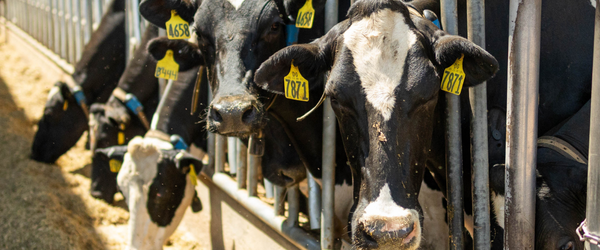
Now, the above is all well and good, but let’s address the elephant in the room… Even if you’re doing all the above correctly, when it comes to colostrum, you either have to buy it or your cows have to make it. Producing enough high-quality colostrum doesn’t begin at calving — it starts weeks earlier, in the close-up cow.
Prepartum nutrition can influence metabolism, mammary development, and colostrum production. Emerging research suggests that supporting rumen function during the close-up period may further benefit mammary physiology and colostrum synthesis.
Good Colostrum Starts Before the Udder
A recent study from the University of Wisconsin–Madison, led by Dr. Jimena Laporta (Tabor et al., 2025), provides new insight into how feeding Galaxis™ Frontier during the close-up period may support colostrum production.
Close-up cows fed Galaxis Frontier prior to freshening made 4.4 lbs more colostrum than control cows (16.1 vs. 11.7 lbs; P = 0.06). Importantly, the additional volume did not dilute the colostrum as protein yield increased by 1 lb per cow (P = 0.03), while IgG concentration was maintained.
Cows receiving Galaxis Frontier prepartum had 20% more mammary alveoli, 10% more mammary epithelial cells, and 30% less apoptosis in mammary epithelial cells.
The results point toward an intriguing rumen-to-mammary connection. These changes suggest that optimizing rumen function during the close-up period may influence hormonal and metabolic signaling that helps prepare the mammary gland for colostrum production and the upcoming lactation.
Those findings complement the results from Fresno State (Real, 2022), which were conducted at a large commercial dairy in California. In that study, Galaxis Frontier was fed for approximately 3 weeks before calving. Cows receiving Galaxis Frontier produced 2.4 lbs more colostrum (18.0 vs. 15.6 lbs, P = 0.03). Colostrum fat concentration also increased from 5.08 to 6.13% (P < 0.01), resulting in approximately 0.33 lb (P < 0.01) more total colostrum fat, while protein and IgG concentrations were maintained.
Both university and commercial studies show a consistent response: feeding Galaxis Frontier during the close-up period supports the mammary gland toward greater colostrum production without affecting IgG concentration.
Environmental Effects on Colostrum Production
Even with a well-managed close-up program, the time of year can have a large influence on both colostrum yield and quality. Research in Jersey and Holstein herds has demonstrated clear seasonal patterns, although the exact mechanisms behind these changes are still being investigated.
One of the most remarkable examples comes from a year-long study of nearly 3,000 Jersey cows. Average colostrum production declined from 14.6 lb per cow in June to 5.5 lb in December (Gavin et al., 2018). Holstein herds also show seasonal variation. In a three-year study including more than 7,500 Holstein cows, multiparous cows produced the most colostrum in May (12.1 lb) and the least in October (8.4 lb; Borchardt et al., 2022).
Season, environment, and other factors affecting the close-up cow are not always under the producer’s control. Therefore, during periods when environmental conditions increase the risk of lower colostrum production, optimizing close-up cow comfort, management, and nutrition becomes even more important.
That’s where technologies such as Galaxis Frontier may provide an additional tool to support the cow and her mammary gland as she prepares for calving.
References
- Borchardt, S., Sutter, F., Heuwieser, W., and P. Venjakob. (2022). Management-related factors in dry cows and their associations with colostrum quantity and quality on a large commercial dairy farm. Journal of Dairy Science, 105(2), 1589–1602. https://doi.org/10.3168/jds.2021-20671
- Gavin, K., Neibergs, H., Hoffman, A., Kiser, J. N., Cornmesser, M. A., Amirpour Haredasht, S., Martínez-López, B., Wenz, J. R., and D. A. Moore. (2018). Low colostrum yield in Jersey cattle and potential risk factors. Journal of Dairy Science, 101(7), 6388–6398. https://doi.org/10.3168/jds.2017-14308
- Nocek, J. E., Braund, D. G., & Warner, R. G. (1984). Influence of neonatal colostrum administration, immunoglobulin, and continued feeding of colostrum on calf gain, health, and serum protein. Journal of Dairy Science, 67(2), 319–333. https://doi.org/10.3168/jds.S0022-0302(84)81305-3
- Real, L. C. (2022). Effects of native rumen microbes as a DFM on colostrum in Holstein dairy cows. California State University, Fresno. Master’s Thesis. https://www.nativemicrobials.com/pdfs/fresno-state-colostrum.pdf
- Sutter, F., Venjakob, P. L., Heuwieser, W., & Borchardt, S. (2023). Association between transfer of passive immunity, health, and performance of female dairy calves from birth to weaning. Journal of Dairy Science, 106(11), 7887–7899. https://doi.org/10.3168/jds.2022-22448
- Tabor, E., Guadagnin, A. R., Guenther, M., Cangiano, L. R., Panisa, F., Anderson, B., Niehues, L., Marotz, C., Embree, M., & Laporta, J. (2025). Effects of feeding a rumen-native microbial live supplement during pre- and postpartum on health, performance, and blood metabolites of Holstein cows. Journal of Dairy Science, 108(11), 12705–12721. https://doi.org/10.3168/jds.2025-26677